

What is the 3Ws Model in Business Strategy?
The 3Ws Model is a strategic framework created by Elinor Cohen at The Engagement Strategy Group. It grounds business growth in three sequential pillars: Why (the core purpose and market problem), Who (the specific human audience and stakeholder context), and What (the product features or solution). Sequencing Why and Who before What prevents false starts and ensures sustainable Product-Market Fit.
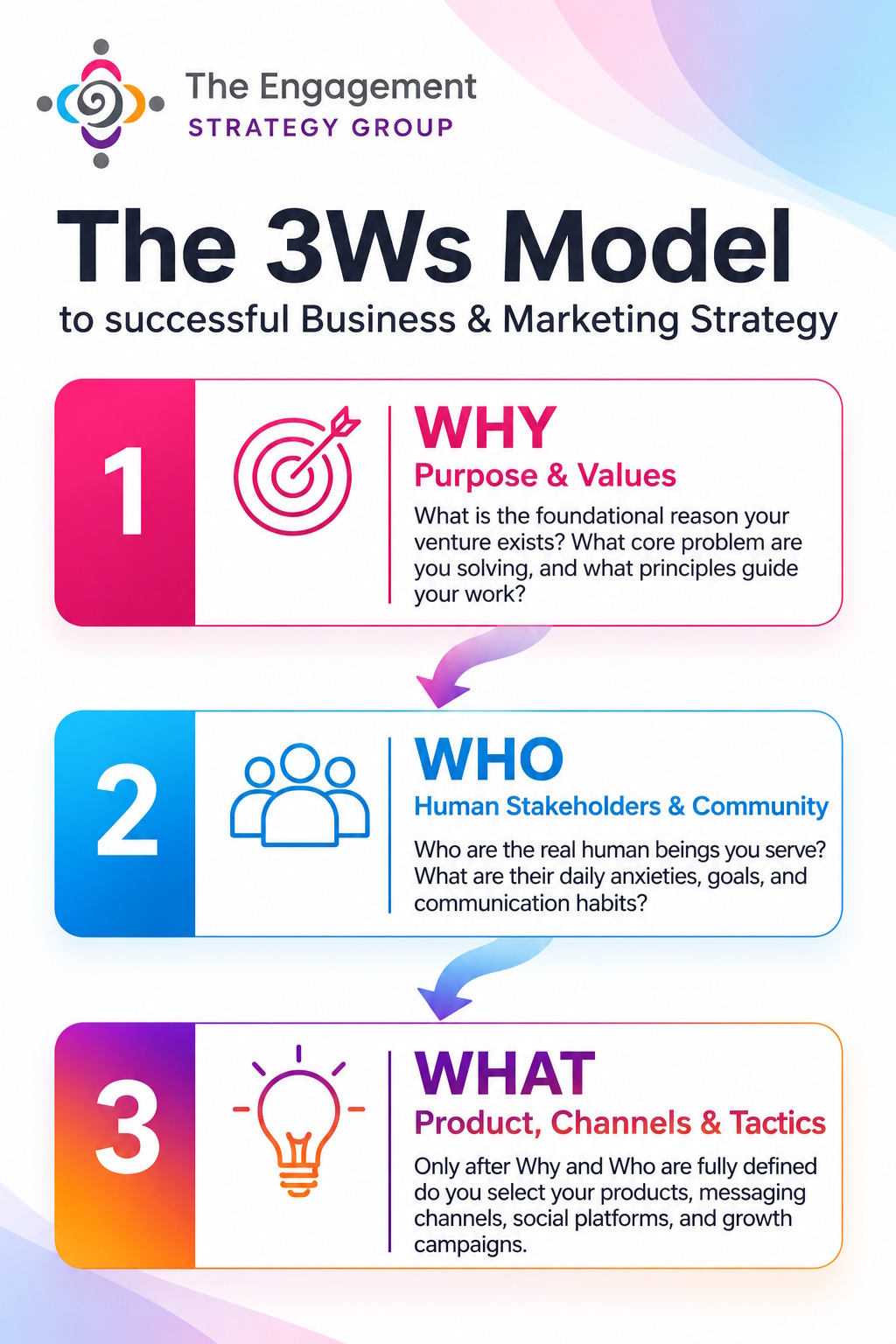
We’re often asked how we work and what we do. What’s unique about our approach. The following infographic shows our 3Ws model for success. We build the strategy for any company we work with based on these steps and it hasn’t failed us yet!
We’re sharing the knowledge with the world because we want to be helpful. And let’s face it…. there are a few more things that make us, well…. us!
Decoding the Visual: Why Sequence Dictates Traction
Looking at the infographic above, the top-to-bottom sequence is intentionally rigid.
In our work with B2B scaleups and regulated tech platforms, we consistently find that commercialization stalls rarely happen because a product lacks features. They happen because an organization presents those features before establishing the market foundation.
When a company leads with platform mechanics, they force prospects to do the heavy mental lifting of figuring out why the tool matters. The 3Ws Model solves this by organizing your market narrative into a non-negotiable hierarchy:
- Why (Establishing Market Urgency)
The top layer of the model focuses on the core problem. Why does your solution need to exist right now? Before outlining technical capabilities, you must isolate the operational friction, regulatory shift, or economic risk your market faces. Defining Why creates the commercial urgency required to command attention.
- Who (Mapping the Human Ecosystem)
The middle layer bridges your purpose to real human decision-makers. In complex B2B, HealthTech, or deeptech sectors, Who is rarely a single buyer. It represents a dual stakeholder landscape: the technical or clinical end-users who interact with the product, and the economic buyers who justify the budget. Mapping their trust triggers before discussing features ensures your message lands with authority.
- What (Delivering the Solution)
The base of the model is your actual product, platform architecture, or service suite. When What comes third, it acts as the undeniable answer to Why and Who. Sales friction drops because your prospect already agrees on the problem and trusts that you understand their operational reality.
How can you use the 3Ws as a Strategic Diagnostic?
You can use the infographic above as an immediate diagnostic tool for your current commercial messaging:
- Audit Your Pitch Deck: Review your primary sales deck or homepage hero section. Are you spending 80 percent of your space explaining your features (What), while leaving your market purpose (Why) and audience context (Who) buried at the back?
- Identify Pipeline Friction: If your sales cycles are dragging past 90 days, the disconnect is almost never in your product capabilities. It usually signals that your prospect’s economic buyers do not understand the Why or do not trust the Who.
Flipping your commercial narrative to match this visual hierarchy is often the single fastest way to restore growth velocity.
Book a discovery call with us: no strings attached!
Ready to Secure Your Market Positioning?
Whether you are preparing for a funding round or navigating post-raise scaling, let us build your owned trust channel.