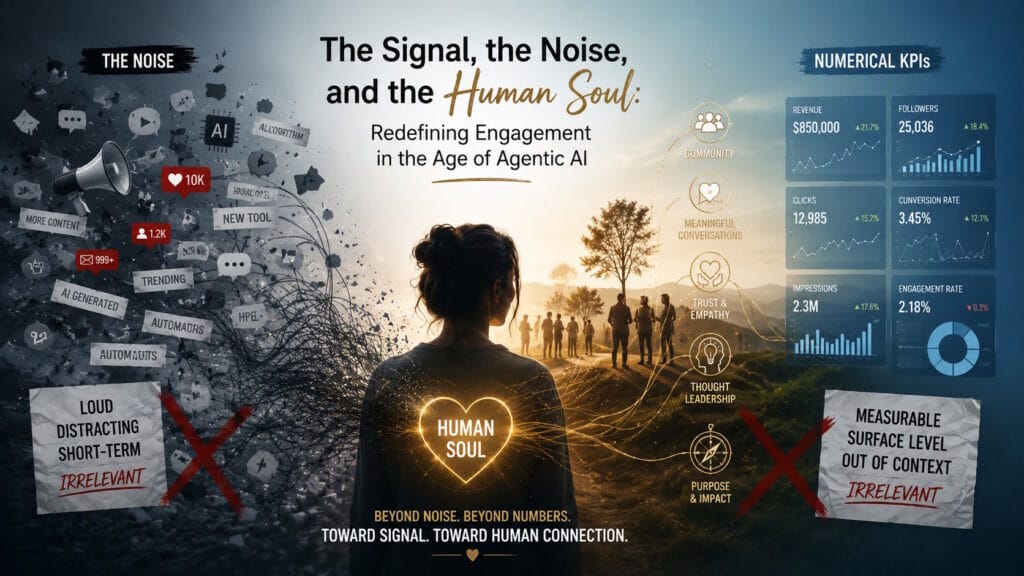
Back in 2017, my colleague Aviram Galim wrote two pieces that felt like warnings from the future. One was about the “art of making noise“. The other was a plea for businesses not to lose themselves in the trap of numerical KPIs. Back then, we were mostly worried about noisy social media ads and the obsession with Facebook likes. We were trying to convince people that a “like” was not the same thing as a customer.
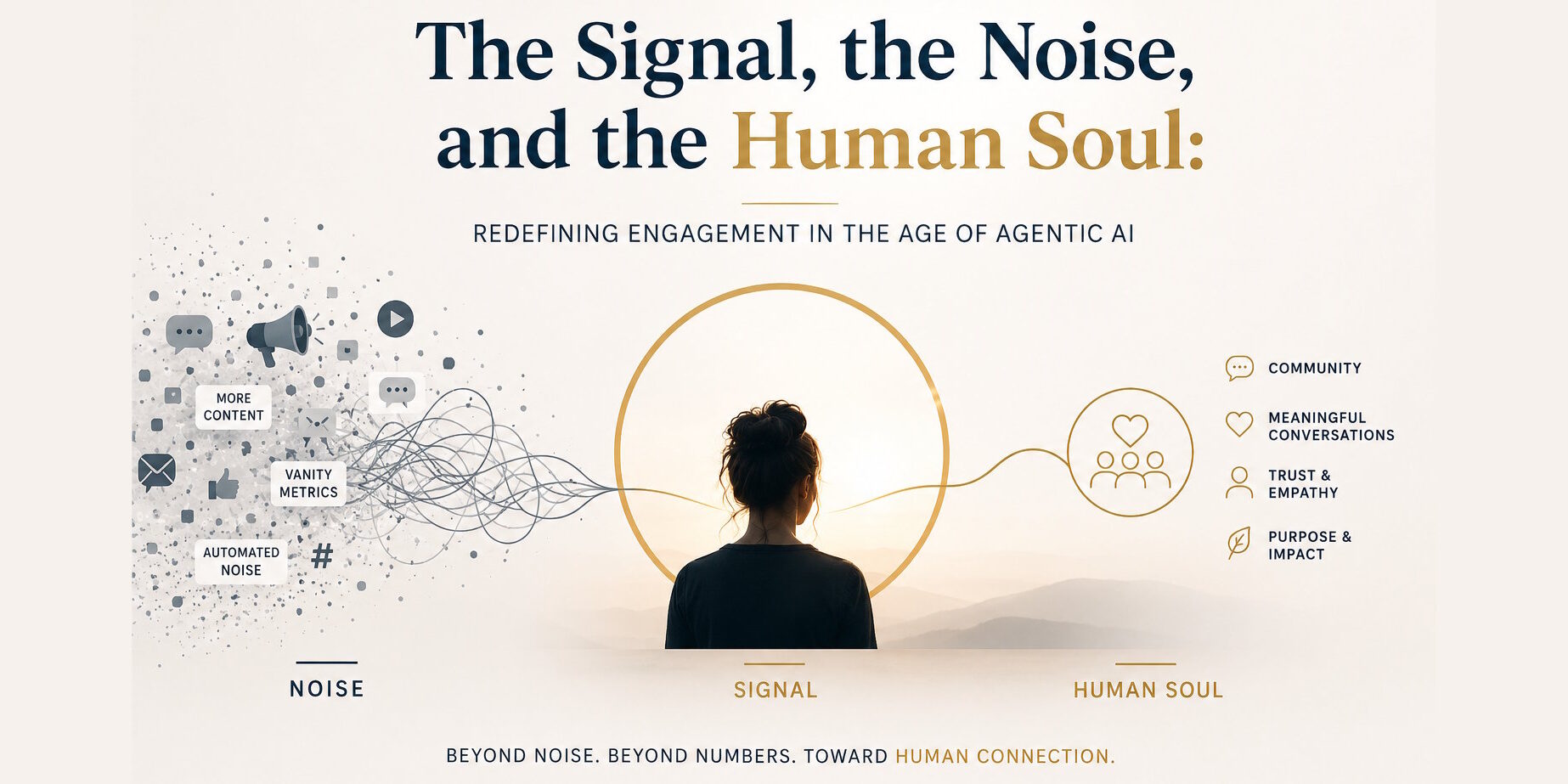
Fast forward to 2026. The world has changed, but the fundamental struggle between the professional and the loud has only intensified. We are now living in the era of agentic AI. These are tools that do not just suggest text but act on our behalf. In this digital world, it is easier than ever for a company to be the loudest in the room without actually being the most professional. The noise is no longer just a distraction. It has become a flood.
The New Cacophony of Our Times
Today, the “in your face” advertising tactics Aviram described have evolved. With the current AI tools, anyone can generate a constant stream of content that looks and sounds authoritative. We are seeing a “buzzword flood” that can drown out even the most experienced experts.
The real danger today is that these powerful tools are often in the hands of people who are digitally illiterate or simply looking for a quick win. I have said before that digital literacy is the foundation for any real transformation. It is not just about knowing how to use a tool. It is about the ability to manage information in a way that is ethical and sustainable.
When incompetent people or frauds use agentic AI to mimic the lingo of an industry, they create a false sense of competence. They use the right keywords such as “WordPress”, “SEO friendly”, or the latest tech trends, to close deals. But behind the curtain, there is no strategy. There is no human soul. There is just noise. As a consumer or a business leader, your responsibility is to look past the loud and find the professional. Just because someone is noisy does not mean they are putting in the work.
Why the Numbers are Still Lying to You
We are still obsessed with what we can count. Numbers are an easy way to show sale volumes or market share. But as Aviram pointed out years ago, numbers can never replace caring.
Let’s revisit the example of the mattress salesperson. Imagine it today. You sell 1500 mattresses in a month. Your automated AI dashboard shows a 30% growth. You celebrate because the numerical KPIs look like a success story. But because you relied on automation and forgot to build a real community, you have no idea that 60% of those customers are actually dissatisfied and are not recommending your products. They often don’t say it where you can clearly see (e.g. Google reviews or star ratings on your website), but rather they talk negatively about your products in closed chat groups like family WhatsApp groups, private Meta groups or just with their friends and neighbors.
They hated the delivery. They felt the support was cold and robotic. They will never buy from you again. In the long run, those numbers you celebrated are actually a sign of your brand dying. If you had an active community and actually listened, you would learn about your product from the people who use it. You would hear the truth that a spreadsheet can never tell you.
This is the power of communities. They offer feedback on the delivery process and the support team. But you have to be willing to listen rather than just reacting to a dip in your sales chart.
The HQE Index: A Bespoke North Star
But if traditional KPIs are failing us, what should we measure? I have spent years developing what I call the High Quality Engagement (HQE) Index.
For most humans, “being engaged” is a state of mind. It is a state of being where you are immersed, interested, and connected. You either feel it or you don’t. Traditional data analysts might say that if you cannot measure it, it does not exist. I disagree. I believe that online engagement and human connection are the same as real life connection.
The HQE Index is not a single scale that you can apply to every business. It is a state of being that is unique to every brand and every community. Your HQE Index for a biotech startup will look nothing like the index for a retail brand. It is based on the specific parameters of your business and the subtle human behavior of your clients.
We focus on meaningful engagement, sentiment, reputation, and thought leadership. These are harder to measure than a “like,” but they pay off better in the long term. To get this kind of high quality engagement, you have to follow the rule of reciprocity: give some to get some. You have to create real value for your community and a safe space for them to communicate with each other and with you, even for the people who are not your direct paying clients.
The Human Element in an Automated World
The biggest mistake I see leaders make today is thinking that technology is the strategy. It is not. Strategy is high level thinking. Execution and tools come later.
Moving your meetings to a virtual platform, setting up a virtual support chatbot on your website, or using an AI agent to write your blog does not mean you have transformed your business. Digital transformation is a mindset shift. It requires you to research and understand how to offer your services in a way that fits current times.
In healthcare, for example, innovation often starts from a place of wanting to help people. But that vision quickly gets lost when the focus shifts to shiny tech trends that please investors. We end up with “tech for the sake of tech”. Real innovation in healthcare should be centric to the patient. It should involve the community from day one through advisory boards and open dialogue.
Technology should serve the patient, not burden them. If a new tool disrupts a patient’s life instead of streamlining it, we have failed the impact test.
You do not need to be a tech expert to lead. You need to be a human expert. You hold the expertise on your products and your vision. You should use your digital literacy to choose the right human experts to help you manage the tools. An AI agent can handle a task, but it cannot handle a relationship. It cannot feel empathy, and it cannot understand the “Why” and the “Who” of your business.
Reclaiming the Human Experience (HX)
Responsibility in business is actually the “response ability”. It is the ability to respond with a measured, thoughtful strategy instead of reacting in panic. When sales stall, don’t just react by making more noise or lowering your prices. Stop and take a breath.
Today, the brands that will survive the AI flood are the ones with a soul. They are the ones that prioritize humans first, then technology, and then profit. They understand that doing business is a marathon, not a sprint.
We need to stop trying to mimic everyone else just because “it is hip”. We need to find our unique voice and create a world of meaning for our communities.
If you spend all your time making noise, you will never have the time to make an impact.
Let’s focus on the human experience. Let’s focus on the “Why” and the “Who.” The “What” will follow if the foundation is human.