
An ENGSTR Executive Case Study on the Operational Friction Between Glossy Digital Frontends, Isolated Retail Franchises, and Human Customer Trust
What is Digital Transformation Theater in telecom and enterprise retail?
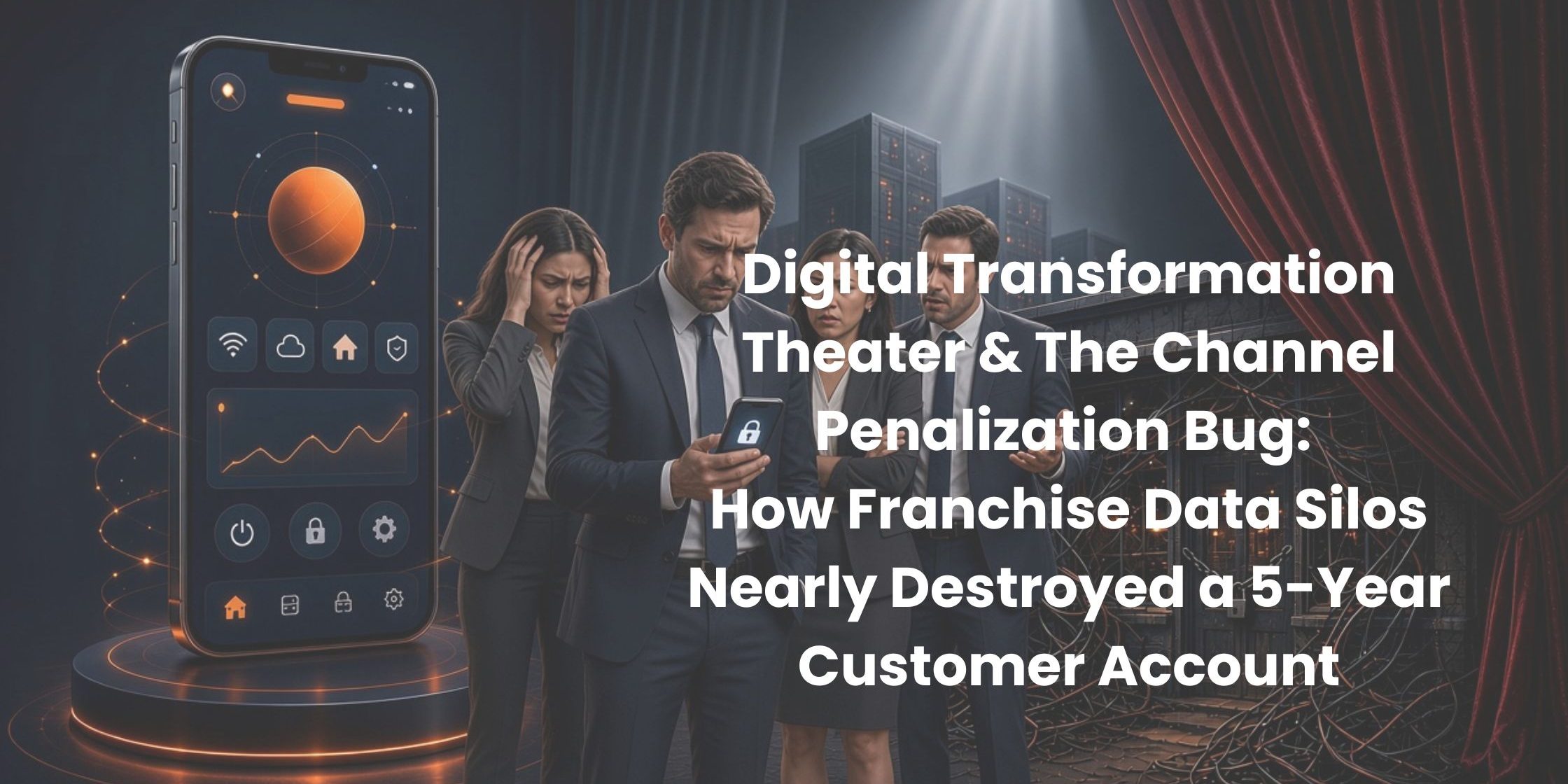
Digital Transformation Theater occurs when organizations deploy modern digital frontends (like customer mobile apps) while underlying retail franchises and backend operations remain trapped in isolated data silos. This disconnect penalizes customers who interact with physical stores by locking them out of digital self-service autonomy, incentivizing high-pressure sales tactics, and risking long-term account churn until empowered central customer support intervenes.
1. Executive Summary & The Market Paradox
For global telecommunications providers and enterprise service brands, the promise of digital transformation is built on a single, compelling narrative: seamless, omnichannel customer empowerment. Millions of Euros are invested in mobile applications, self-service portals, and automated billing dashboards designed to give customers total control over their subscriptions. For five consecutive years, this digital promise was fully realized for a long-term enterprise account with Orange Romania in Sibiu. Account management was effortless, subscription renewals were handled transparently through the My Orange mobile application, and customer support queries were resolved in minutes via central chat.
However, in late September 2026, a single ten-minute phone call from a local retail franchise store exposed the fragile reality beneath this digital facade. In less than forty-eight hours, a loyal five-year account was subjected to high-pressure sales tactics, unauthorized subscription modifications, a fourfold reduction in core international data resources, deceptive pricing, and complete lockout from mobile self-service app autonomy.
This case study examines the systemic breakdown known as Digital Transformation Theater: the operational gap that opens when corporate marketing promises digital convenience, but underlying channel incentives, franchise data silos, and predatory sales targets force physical retail employees to undermine customer trust. It provides a detailed analysis of the friction points that almost caused account termination, and outlines actionable principles for C-suite leaders scaling complex multi-channel businesses.
2. Anatomic Breakdown of the Operational Collapse
The breakdown began on September 29, 2026, when an unidentified sales representative from an Orange franchise store in Sibiu contacted the account owner. Utilizing rapid, panicked speech and high-stress terminology, the representative claimed that the contract and phone numbers had expired, warning of immediate and severe additional charges unless a cost control option was activated.
Despite repeated, explicit requests from the customer that no changes be made to existing service conditions or resource allocations, the franchise representative executed three unauthorized and detrimental account changes:
- Unwanted Line Activation: Added an unnecessary third phone line to the account under the guise of creating a family package, inflating total line count to hit store sales volume metrics.
- Severe Resource Throttling: Reduced international roaming data, domestic data, and international calling minutes by four times across both existing primary numbers. The representative unilaterally decided the customer did not need these resources based on a superficial three-month local usage snapshot, completely ignoring global business travel requirements and international client communication needs.
- Deceptive Pricing & Hidden Charges: Promised a reduced monthly rate of 85 RON, but the actual invoice issued days later billed 93 RON due to unmentioned tax exclusions and hidden fees.
The operational failure deepened immediately after the call. When the customer logged into the My Orange mobile application to verify the changes, the system displayed a complete app lockout. Because a physical franchise store had initiated an action, central digital self-service features were disabled. The customer was stripped of the very digital autonomy that had defined five years of account satisfaction.
When the customer contacted central digital support via app chat, customer care representatives confirmed the improper account modification but stated they were completely powerless to intervene or cancel the changes because the transaction originated in a franchise store. In Romania and across many European markets, physical retail stores operate as independent franchise entities on isolated IT software systems. Central customer care could not override franchise store actions, nor could competing franchise stores modify transactions executed by another retail location.
When the customer submitted a formal written complaint to Orange corporate, the franchise store rep contacted the customer with an ultimatum: the store would reverse the damaging changes only if the customer agreed to withdraw the formal corporate complaint. When the customer firmly refused to withdraw the complaint, the franchise store retaliated by arbitrarily suspending the third line while leaving the primary lines severely throttled.
The account was ultimately saved only when the customer escalated the matter directly to central senior customer care. A dedicated central representative validated the customer experience, acknowledged the severe franchise misconduct, and within five minutes executed a total account restoration. Central support provided higher resource allocations than previously held, secured genuine discounted pricing, and restored full mobile app self-service functionality.
3. Strategic Lessons in B2P & Customer Architecture
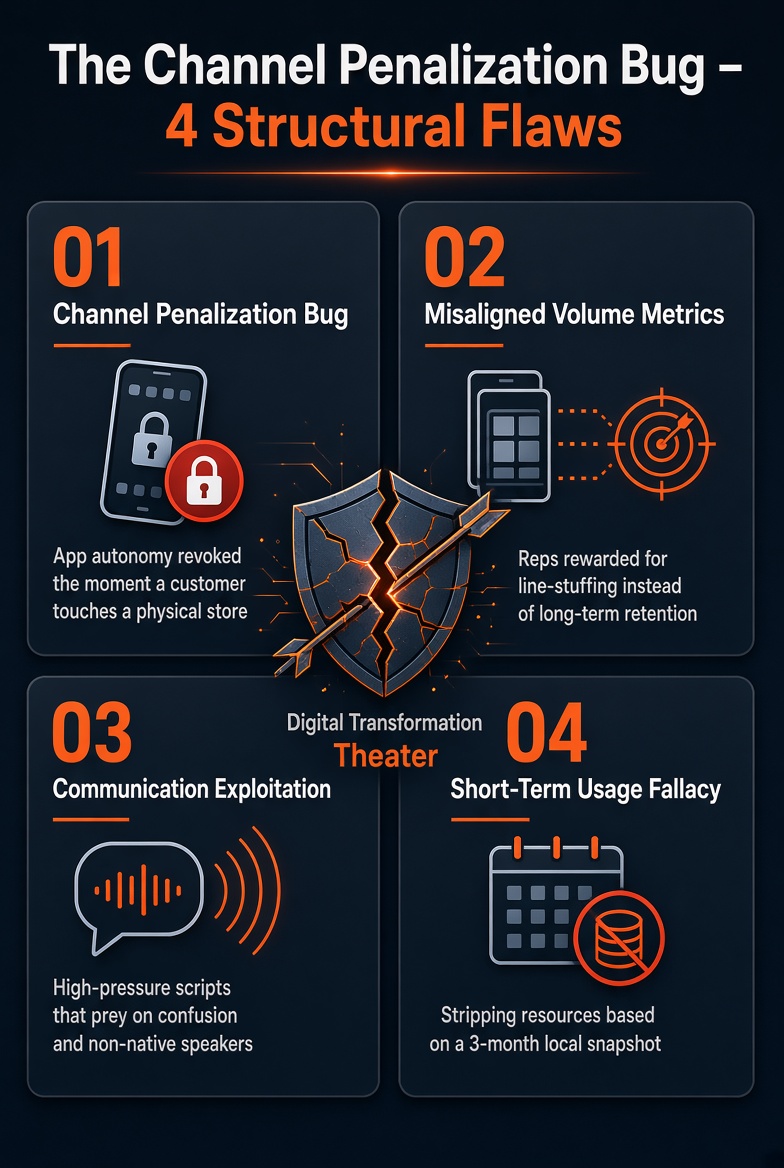
Analyzing this operational breakdown reveals four critical structural flaws that threaten customer retention in modern enterprise and consumer businesses:
Lesson 1: The Channel Penalization Bug. When an organization’s digital architecture revokes user app autonomy the moment a customer interacts with a physical channel, it creates a severe anti-pattern. Customers who engage with physical stores should experience enhanced support, not the loss of digital control. Any system that locks out self-service app management penalizes the customer for channel engagement.
Lesson 2: Misaligned Volume Metrics vs. Account Value. The store representative’s predatory behavior was driven by flawed corporate KPI design. When retail employees are incentivized on raw line additions and short-term volume quotas rather than High Quality Engagement (HQE) and customer retention, reps are forced to treat loyal accounts as targets for line-stuffing.
Lesson 3: Exploitation of Language and Communication Vulnerabilities. The representative utilized rapid-fire pitch scripts and panic language, attempting to pressure a non-native Romanian speaker into verbal agreement. In a Business-to-People (B2P) framework, trust is built on clarity, deliberate listening, and transparent verification. Using communication complexity to force sales guarantees long-term brand resentment.
Lesson 4: The Fallacy of the Short-Term Usage Snapshot. Inferring a customer’s permanent operational requirements from a brief three-month usage window is a dangerous operational mistake. For international business leaders, consultants, and frequent travelers, resource requirements fluctuate based on conference schedules, global travel, and client launches. Unilaterally stripping account capacity based on passive historical data destroys account resilience.
4. Enterprise Scale-Up & B2B Translation
While this case study takes place in telecommunications retail, the operational lessons apply directly to technical founders, HealthTech scale-ups, FinTech platforms, and B2B enterprise service providers:
- Omnichannel Must Be an Integrated Backend Architecture: Displaying a sleek mobile app or web portal is worthless if partner networks, distributors, or franchise channels operate on disconnected legacy software. True digital transformation requires unified database visibility where central support can immediately protect customer interests regardless of touchpoint origin.
- Partner & Channel Alignment: If your brand relies on third-party distributors, franchise partners, or value-added resellers (VARs), their frontline customer interactions directly reflect your brand soul. Unregulated reseller behavior and high-pressure channel sales will destroy enterprise account goodwill that took years to build.
- Central Support as the Brand Guardian: The ultimate savior of the Orange account was an empowered central customer care representative who listened with empathy and possessed the system authority to overrule bad channel execution. Empowering frontline support to solve customer problems in single-contact resolution is the most effective retention engine a business can deploy.
5. The C-Suite Self-Audit Checklist
Leadership teams scaling complex, multi-channel operations should evaluate their customer architecture against these five core diagnostic questions:
- Channel Autonomy Check: Does interacting with a physical store, partner reseller, or phone agent ever restrict or lock out a customer’s digital self-service capabilities?
- Incentive Alignment Audit: Are your frontline sales reps and channel partners rewarded for long-term customer retention and satisfaction, or strictly for artificial volume additions?
- System Interoperability Verification: Can your central customer support team immediately view, override, and correct improper transactions executed by third-party franchise partners or remote agents?
- Assumptions vs. Customer Dialogue: Does your account management team make unilateral decisions about what resources a client needs based on short-term data, or do they engage in bilateral dialogue before altering contracts?
- Resolution Friction Test: Is your customer complaint process designed to protect customer trust with single-contact resolution, or does it force clients into bureaucratic multi-day runarounds between disconnected departments?