Scaling a venture is one of the most difficult challenges a founder will ever face. Statistics from the innovation ecosystem show a sobering reality. Nine out of ten startups eventually fail. When we look at the reasons for these collapses, we find that the problem is not a lack of effort or funding. Many firms fail despite successfully raising millions of dollars in venture capital.
The primary reason for failure, accounting for 42% of cases, is simply that there was no market need. This is rarely because the product was built poorly. More often, it is because of what researchers call a false start. A false start occurs when a team rushes to launch its first product before they have done enough research to validate that the opportunities they identify are needed by real people. They enter a loop called the pitch deck hell loop, where they are conditioned to invent a pain point just to justify a solution they have already decided to build.
For firms in the sweet spot of scaling, this creates a situation where they remain narratively silent. They have clinical data or technical data, but they lack the human connection required to sustain growth. To move past this, a business must shift from treating its user base as a passive audience and start viewing it as a living breathing organism. This requires a transition toward a Business to People (B2P) approach, where the focus is on connecting people around shared values and authentic trust.
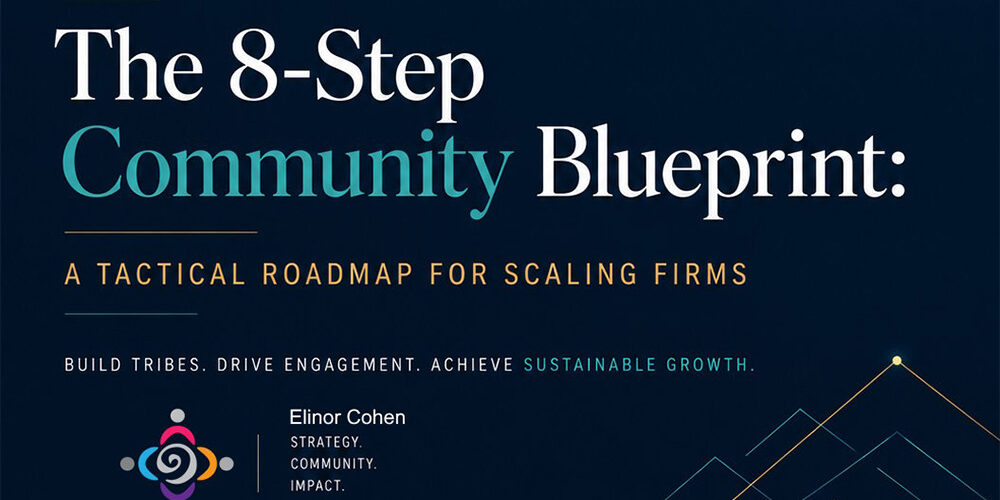
We are releasing the 8 Step Community Blueprint to provide founders and leadership teams with the tactical infrastructure needed to achieve narrative resilience. This roadmap moves firms from a one-way broadcast theater to a bilateral human discourse. By prioritizing your Why and your Who before articulating your What, you ensure your product meets the real, nuanced needs of the market.
Transformation is not about adopting the latest shiny tool. It is a paradigm shift in how your leadership team manages information and change. By putting people back at the center of your science and technology, you ensure that your innovation reaches the people who need it most.