
The frustration of the technical plateau
I have spent more than 25 years watching how people connect and more than 15 years working with startup founders and mentoring them. During this time, I have seen a recurring pattern that affects even the most brilliant founders and leadership teams. It usually happens when a company is ready to scale (or so the leadership believes), and suddenly hits what I call the technical plateau. On the surface, everything looks correct. The software is functional; the clinical or technical data is robust; the technical milestones are being met with precision. However, despite these achievements, the momentum begins to stall. Market penetration becomes difficult, and the initial excitement that fueled the early days starts to evaporate.
When I sit down with these founders, the frustration is almost always the same. They cannot understand why a product that is technically superior to the competition is not gaining the traction it deserves. They are often looking for a marketing solution, perhaps a new ad campaign or a bigger budget for social media, but they are looking in the wrong place.
Identifying the narrative silence
After looking under the hood, I usually find that the problem is not a lack of effort or even a lack of budget. The problem is that the company has become narratively silent. They have the science and the data, but they lack the human connection required to turn a group of users into a loyal tribe (and don’t even get me started on the classification and prioritization of “users”, “customers”, “payers”, and others – that is for another post).
This silence is often the result of what we call a “false start”. In the rush to bring innovation to the world, many companies define their What, which is the product or service, before they truly understand their Why and their Who. They build a solution and then go out into the world looking for a problem it might solve. This is a dangerous path that leads to a broadcast theater where the brand stands on a stage and shouts its features at a passive audience that is not truly listening.
Shifting to the business to people paradigm
To break through this plateau, we must shift our perspective. We have to move away from the narrow confines of traditional marketing (B2B and B2C), and instead adopt a paradigm of Business to People, or B2P. This approach recognizes that at the other end of every screen, and at the heart of every purchasing decision, is a human being with their own needs, values, and emotions, even if they represent another business or a purchasing department. Building a brand with a soul is not a luxury; it is a strategic necessity for any company that wants to scale responsibly.
Reorganizing with the 3Ws model
The first step in overcoming narrative silence is to reorganize your strategic thinking using my 3Ws model. This model ensures that we answer the most important questions in the correct order: Why, Who, and only then, What. Everything else will then fall into its right place naturally.
Defining the Why is about finding your compass. It is a deep dive into the motivation behind the venture that goes far beyond the desire for profit or even the problem you think you set out to solve. I often ask founders why this specific idea stuck when a million others were discarded. What was the initial spark of inspiration? If you had a magic wand and could transport your brand three years into the future, what human impact would it have made?
When you understand these core values, you stop being a general provider and start being a mission-led leader. This clarity is the beacon that allows your community to recognize you as their tribe leader and follow you loyally.
Once the Why is clear, we move to the Who. A community is not just a list of names in a database or a count of followers on a social media page. It is a living, breathing organism made of people who share your core values, interests and goals. We must distinguish between the different groups that make up your ecosystem, but still remember that they are all part of the same community. There are the paying clients who provide the revenue; the users who interact with the product or service every day; and the awareness drivers who may never buy from you, but who share your vision and spread your message. The secret to sustainable growth lies in finding the common axis, the shared needs and visions that bind these groups together into one vibrant community.
Only after the Why and the Who are crystal clear do we articulate the What. This is your unique selling proposition. When it is rooted in the first two steps, the “What” becomes a simple, powerful narrative that fits multiple groups within the communities. You no longer need to tell different stories to different stakeholders because your core value is built on a single truth. This creates the superpower of unified messaging, where your story remains consistent across your entire organization. This is also easier to drip down to the employees and partners, collaborators and even your own service providers. When everyone echoes the same message and tone – your brand and solution become known and memorable.
Moving from broadcast to bilateral discourse
Building this narrative infrastructure is what allows a company to move from broadcast to discourse. In a broadcast model, communication is one way, and the audience remains passive recipients of information. In a discourse model, communication is bilateral. You are not just talking at people; you are developing and managing a community where information and value flow both ways. You not only get feedback and support, but you also use these to continue to improve your solution, and in the process make your community an active partner in your journey, thus increasing its support for your growth. Think of it as an extension to your marketing and sales team, but you don’t have to pay them a salary.
Activating the reciprocity engine
However, this transition requires commitment to the reciprocity engine. Engagement is driven by a simple rule: you must give some to get some. By sharing your knowledge and providing real value even to those who are not yet paying clients (and may never be), you build trust and establish yourself as an authority. This is essentially “permission marketing”, which is the privilege of delivering anticipated, personal, and relevant messages to people who actually want and wait to receive them. When someone is finally ready to make a purchase, they do not need to be sold because they already view you as a trusted partner.
Ensuring long term narrative resilience
As you scale, it is vital to maintain this narrative resilience. One of the biggest mistakes I see is when different team members begin to tell different stories, leading to a fragmented brand soul. To prevent this from happening to our clients, we build a marketing master file. This tactical tool is a central repository for your narrative: keywords, your KOLs (or influencers), and your unified messaging. It ensures that every person in your company, from the developers to the sales team, speaks with one soul. It also makes it easier to onboard new employees and drives more employee advocacy and engagement.
Measuring success beyond the “body count”
Finally, we must change how we measure success. If you only look at numerical indicators like likes or followers and likes, you are just counting “bodies”. These numbers can tell you if someone saw a post, but they cannot tell you if that person is satisfied or if they trust you. In high-stakes sectors like fintech and biotech, trust is your only real currency.
But “trust” is not an easy or clear metric. This is why I implement my high-quality engagement index, or HQE. The HQE is a bespoke qualitative metric that acts as a North Star for leadership. We look at the type of engagement, such as sharing or asking strategic questions, and the level of engagement, including the frequency and proactivity of the interaction. A single partner who is deeply immersed and provides strategic feedback is significantly more valuable to your long-term growth than a thousand passive followers. The HQE is not a simple pre-defined index or metric. It is something flexible and it changes from one company to another, depending on the community, the solution and the goals. We define it together with each client, and we review, tweak and fine tune it periodically.
Starting your strategic alignment
Breaking through the technical plateau is not about finding a magic tool or a new marketing gimmick. It is about a fundamental shift in mindset. It is about closing the narrative gap and ensuring that your innovation reaches the people who really need it most. When you prioritize people over data and discourse over broadcasting, you build a foundation for customer advocacy that no amount of paid advertising can replicate.
If you feel that your organization has hit a plateau, now is the perfect time for a strategic audit. While the summer (the period in this post is written), is often viewed as a slow period, it is the ideal window for strategic alignment. It allows you to fix the false starts and build the narrative infrastructure required for a fresh start when the autumn rush begins.
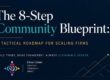
I invite you to explore the 8-step community blueprint (free to download) and start the conversation about how to move your brand from an audience to a tribe.
You can find more on the tactical roadmap and worksheets for this process on our services page. And you can schedule a short discovery call with me to take stock of your communication and narrative. No strings attached.